





































 855-600-3777
 info@maxsourceworld.com
 maxsourceworld
 276 Fifth Avenue, 704-1746 New York, NY 10001


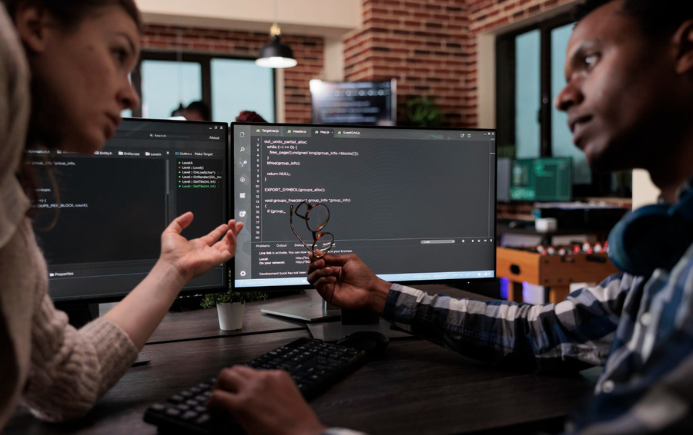
Many U.S. businesses don’t realize how easy it is to “overpay” for a software developer or software development engineer until they review their actual cost-to-output ratio. Overpaying isn’t just about offering a high salary. It also includes inflated compensation because of local talent shortages, paying premiums just to compete with nearby firms, absorbing heavy overhead for onsite roles, and hiring candidates whose skills do not exactly match the technical needs of the position. When the role and skill level are misaligned, companies often spend more than necessary, while still not getting the engineering impact they expect.
As engineering needs grow, more U.S. businesses are shifting toward remote companies and distributed teams. This shift isn’t about cutting corners; it’s about optimizing budgets in a way that still maintains high technical quality. Companies are learning that when they hire developer roles remotely, they gain access to stronger talent pools, more flexible staffing structures, and far better cost control, all without sacrificing professional standards or productivity.
This article explores why thoughtful remote hiring reduces overall costs while strengthening staff management, improving access to specialized skills, and supporting long-term business growth.
Understanding the Cost Structure of Local Hiring
Salary Inflation in Competitive Tech Hubs
Cities like San Francisco, Seattle, Austin, and New York have thriving technology ecosystems, but they come with steep hiring costs. The intense competition for local talent pushes salaries upward, often far beyond the actual value of the work required. Companies pay not only for skill but also for geography, and the premium can be significant.
Often, businesses aren’t paying for higher productivity; they’re paying to keep up with market pressure. This makes hiring a software developer or software development engineer locally more expensive than necessary, especially when equivalent or stronger talent exists in other regions at more sustainable compensation levels.
Additional Overheads Beyond Salary
Salary is just one line in the budget. Local hiring requires companies to provide office space, desks, equipment, utilities, and day-to-day facility management. These costs increase with every new on-site hire.
Additionally, administrative expenses, such as HR support, payroll tax handling, legal compliance, and insurance, add up quickly. Many U.S. businesses underestimate how much these operational responsibilities inflate the total cost per employee.
Hidden Costs Businesses Often Miss
Local hiring also carries hidden financial burdens. Long hiring cycles slow down project timelines, and any delay in finding the right software developer can place unnecessary pressure on product teams. The cost of turnover is even higher. When a developer leaves unexpectedly, it affects knowledge continuity and forces companies to restart the hiring and training process.
Ramp-up time is another overlooked expense. Even when a hire is a perfect fit, onboarding, training, and aligning with internal systems require time, and time is money.
Why Remote Hiring Is Reshaping Cost Efficiency
Access to Skilled Developers Without Location-Based Premiums
Remote hiring allows businesses to look beyond high-cost regions. When companies hire developer roles remotely, they can choose candidates based on skill, not zip code. Global talent pools offer developers with strong experience in modern frameworks, cloud systems, automation, and specialized technologies such as blockchain or mobile development.
This eliminates the need to pay inflated salaries caused by local competition and helps companies maintain fair, competitive compensation that aligns with true expertise.
Flexibility in Staffing Models
Remote companies offer staffing models that are difficult to achieve locally. U.S. businesses can hire a remote employee full-time, part-time, or on a project-based schedule, depending on workload. This flexibility prevents long-term payroll commitments when work demand fluctuates. It also makes budgeting more predictable because companies pay only for the level of support they actually need.
Lower Operational and Administrative Costs
Remote hiring reduces office-related costs dramatically. Many remote employees use their own home office setup, which saves on equipment and infrastructure. Administrative tasks such as office coordination, facility support, and on-site supervision become lighter as well.
In addition, streamlined staff management systems allow HR and team leads to oversee remote teams with significantly fewer resources.
How Remote Teams Maintain High Technical Quality
Availability of Specialized Expertise
Hiring remotely opens the door to niche engineering skills that may be difficult or costly to find in a single U.S. city. Whether a team needs a blockchain specialist, a DevOps engineer, a mobile expert, or an automation professional, the chances of finding a strong fit increase when hiring is not limited by geography.
Better alignment between skill and role reduces wasted spend and empowers teams to work with a software developer or software development engineer who can deliver at the right level.
Strong Performance Monitoring and Output-Based Management
Remote teams remain highly accountable when companies use structured processes. Tracking performance through measurable deliverables, output-based evaluations, and reliable project management workflows ensures consistent engineering quality.
Tools that support time management, code reviews, documentation, and sprint tracking give leaders the visibility they need while still fostering independence among remote employees.
Improved Productivity Through Asynchronous Work
Remote hiring promotes deep work by minimizing interruptions. Developers in distributed environments often benefit from quieter spaces and flexible hours, allowing them to concentrate on complex technical tasks. This leads to fewer mistakes, faster completion times, and overall stronger delivery.
Real Cost Savings When You Hire Developer Roles Remotely
Compensation Comparison: Local vs. Remote
While salaries vary by region, most businesses notice a meaningful cost difference when comparing local and remote hiring. Compensation depends on the skill level, seniority, and technology stack, but remote companies help businesses access quality engineering talent without high-cost city premiums.
The key is that businesses pay for expertise, not location, which results in more reasonable long-term budgets.
Faster Hiring Reduces Project Delays
Remote teams can be assembled more quickly because the talent pool is broader and not restricted to a single region. When businesses avoid long hiring cycles, they avoid costly downtime. Faster onboarding helps projects stay on track and prevents unnecessary slowdowns in product development.
Reduction in Turnover Costs
Remote hiring gives companies more choices, improving the chances of finding someone who is professionally aligned with the role and company culture. Better alignment means less turnover, lower training costs, and a more stable engineering function overall.
The Strategic Value of Distributed Teams
Stronger Business Continuity
Distributed teams reduce dependency on a single location. If an office faces disruptions, weather events, infrastructure failures, or other unexpected issues, a remote employee network keeps operations moving. This creates greater business resilience.
Balanced Workload Distribution
Different time zones become an advantage in distributed environments. Companies can extend development cycles, improve support responsiveness, and drive faster testing and integration. With smart staff management, this round-the-clock coverage enhances overall productivity.
Better Scalability for Long-Term Roadmaps
Remote hiring makes scaling easier. Companies can adjust team size, add specialized engineers, or phase out temporary roles without the limitations of local supply. This makes long-term resource planning far more manageable.
Key Considerations When Hiring Developers Remotely
Evaluating Skill and Technical Fit
Rigorous evaluation remains essential. Coding tests, portfolio reviews, and structured technical interviews help verify whether a candidate can solve real-world engineering challenges. The goal is to ensure that remote candidates meet the same standards expected of any U.S.-based software developer or software development engineer.
Ensuring Communication and Accountability
Clear communication guidelines keep distributed teams aligned. Expectations around response times, meeting schedules, progress updates, and documentation should be established from day one. These habits support smooth collaboration and transparent workflow management.
Establishing Strong Staff Management Frameworks
Companies should implement consistent processes for onboarding, performance reviews, feedback cycles, and productivity monitoring. The right tools, task tracking platforms, version control systems, and communication channels make remote staff management more structured and reliable.
How to Determine Whether Remote Hiring Is Right for Your Organization
Assessing Your Budget and Current Team Structure
Start by identifying which roles are well-suited for remote work. Not every task requires onsite presence, and many engineering functions are ideal for distributed models. Understanding current workload, team bottlenecks, and collaboration needs will guide this evaluation.
Understanding the Skills Needed for Future Projects
Long-term product goals influence which developers you should add to your team. By mapping your technology roadmap, you can determine whether you need generalists, specialists, or a mix of both. Remote hiring gives you greater flexibility to access those skills on demand.
Establishing a Sustainable Remote Hiring Approach
Many U.S. businesses find success with a hybrid model, integrating both local staff and remote employees. This approach supports collaboration while reducing costs and maintaining flexibility. Consistent communication practices and cultural alignment ensure the team remains cohesive and productive.
Conclusion
Many U.S. businesses end up overpaying for software developers because their hiring strategies are limited to high-cost regions. Expanding beyond local markets comes with immediate financial advantages and offers access to skilled developers who match the role more precisely.
Remote hiring allows companies to reduce salary premiums, simplify operational overhead, and strengthen overall staff management. At the same time, remote employees help businesses maintain high engineering standards, improve productivity, and scale confidently.
Remote companies help U.S. businesses build strong distributed teams that deliver exceptional value, while keeping budgets firmly under control.
Frequently Asked Questions
- How does remote hiring help reduce the cost of hiring a software developer?
Remote hiring eliminates location-based salary inflation, reduces office overhead, and minimizes administrative expenses.
- Are remote software development engineers as skilled as local hires?
Yes. Remote developers often come with strong experience in modern stacks, cloud technologies, automation, and niche specializations.
- How do remote companies ensure productivity and accountability?
Remote companies use structured systems: sprint planning, code reviews, output-based performance tracking, and clear communication workflows.

